
FibroScan in Chronic Liver Disease: Diagnosis and Monitoring

- Stages of Chronic Liver Disease
- What are the symptoms of chronic liver disease?
- What is Fibroscan?
- What does a Fibroscan look for?
- What are the Fibroscan Test indications?
- What does FibroScan measure?
- Why does the doctor recommend the Fibroscan test?
- Preparation required for the Fibroscan
- Procedure of Fibroscan
- Interpreting Fibroscan Results: Stiffness (kPa) and CAP Scores
- Benefits of Fibroscan Over Traditional Liver Biopsy
- Limitations and Considerations for Fibroscan Technology
- Conclusion
- Frequently Asked Questions
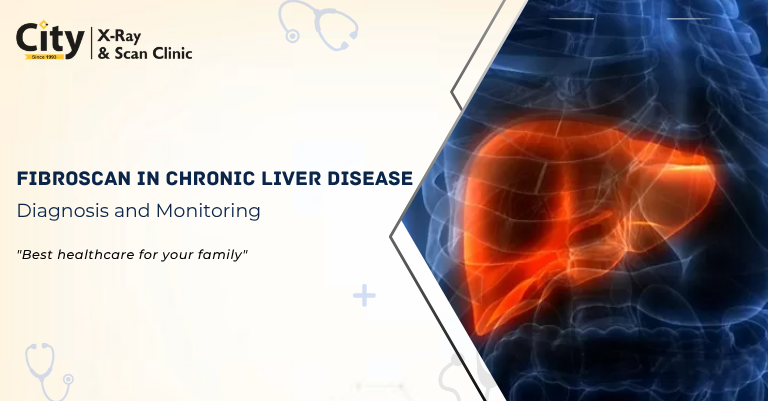
Chronic liver disease is defined as any liver illness that is active for six months or more. Although there are numerous types of chronic liver disease, including viral hepatitis, alcohol-associated liver disease, metabolic dysfunction-associated steatotic liver disease (MASLD), and metabolic dysfunction-associated steatohepatitis (MASH), they frequently have similar progressions and complications. Despite the liver's ability to heal itself, untreated liver illness can progress to cirrhosis, chronic scarring of the liver, and, eventually, liver cancer or liver failure.
Stages of Chronic Liver Disease
- Inflammation (hepatitis). During this stage, the liver swells or becomes inflamed.
- Fibrosis is a type of chronic liver damage that causes scarring of the liver tissue. In certain circumstances, fibrosis can be reversed if detected early (depending on the reason).
- Cirrhosis causes irreversible scarring of the liver that cannot be reversed. Individuals with cirrhosis are more likely to acquire liver cancer.
Liver failure occurs when the liver quits working entirely.
What are the symptoms of chronic liver disease?
Early symptoms of liver disease
- Nausea
- Upper abdominal pain
- Fatigue
As liver disease worsens, you may begin to notice symptoms that are more specifically related to diminishing liver health:
- Jaundice (a yellowing of the skin or whites in the eyes)
- Pale-colored stool
- Urine is a dark colour
- Weight loss or muscle loss?
- Trouble digesting foods, especially fats
- Itchy skin.
As chronic liver disease progresses, liver failure can affect your hormones, nutrient absorption, and blood flow. As these begin to grow, you may observe:
- Changes in the look and structure of the nails
- Easy bleeding and bruising.
- Red palms on your hands.
- Small yellow fat deposits on the eyelids or skin.
- Spider angiomas are purple spots on the skin's surface.
- Petechiae are little red dots on your skin.
- Swelling in the abdomen, ankles, feet, hands, and face.
What is Fibroscan?
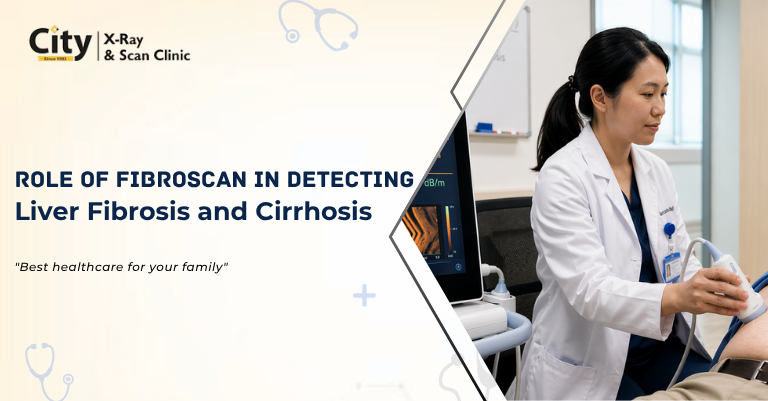
FibroScan, commonly known as liver elastography, is a specialist ultrasound test that detects liver stiffness and fat content. This non-invasive, fast, and painless treatment evaluates liver scarring (fibrosis) and fat buildup (steatosis), which can be signs of liver illness. FibroScan is becoming increasingly popular as a safe and pleasant alternative to a standard liver biopsy.
What does a Fibroscan look for?
The FibroScan is a noninvasive technique to assess the condition of your liver and determine the stage of liver disease you and your care team may be dealing with. The FibroScan measures liver stiffness, which reflects the presence and extent of scarring.
Fibrosis is the earliest stage of liver scarring, whereas cirrhosis is more severe scarring. The FibroScan works similarly to a fibrosis scan, using scarring measurements to establish a diagnosis or follow the evolution of liver disease.
What are the Fibroscan Test indications?
The main purpose of FibroScan is to determine the stage of liver disease and the extent of liver scarring. Patients with chronic liver illness, such as fatty liver, chronic alcoholism, chronic hepatitis C, and chronic hepatitis B, can benefit greatly from this. The idea is that the liver stiffness reading will increase with the amount of fibrosis and scarring. You could use this reading to:
Determine the current level of liver damage; track the progression or regression of the disease using successive assessments; and direct the prognosis and future care, including treatment.
What does FibroScan measure?
FibroScan delivers two essential parameters for assessing liver health.
- Liver Stiffness Measurement (LSM): This test evaluates liver stiffness, which is directly proportional to the amount of scarring (fibrosis). A high stiffness score could indicate advanced liver disease or cirrhosis.
- The Controlled Attenuation Parameter (CAP) monitors the quantity of fat in the liver. High fat levels may indicate fatty liver disease, which can cause liver damage over time if not treated.
FibroScan delivers a full picture of your liver health by assessing both liver stiffness and fat content, which can help detect early indicators of liver disease before it progresses to more significant damage.
Why does the doctor recommend the Fibroscan test?
The FibroScan can be used to assist in identifying or monitoring the progression of disorders affecting the liver, such as:
- Nonalcoholic fatty liver disease (NAFLD) occurs when excessive amounts of fat are deposited in liver cells, increasing the risk of liver injury.
- Alcoholic liver disease, also known as alcoholic hepatitis, is liver damage caused by consuming more alcohol than your liver can process, resulting in inflammation and scarring (cirrhosis), which can progress to liver failure.
- Nonalcoholic steatohepatitis (NASH) is a more aggressive form of NAFLD that causes liver damage, including cirrhosis, and can progress to liver failure.
- Viral infection: When the liver is infected with the Hepatitis B virus (HBV) or the Hepatitis C virus (HCV), it produces inflammation and increases the chance of developing cirrhosis, liver cancer, or liver failure.
- Hemochromatosis is a condition in which your organs, especially the liver, accumulate an excessive quantity of iron, which can become toxic to the body, causing liver damage and other potentially life-threatening problems.
The FibroScan test can also be used to assess patients' liver health after a liver transplant.
Preparation required for the Fibroscan
- Fasting Prior to the Test: The majority of doctors will instruct patients to fast for at least three hours before the procedure. Eating or drinking (other than simple water) may have an impact on the test findings, as food and liquid consumption might affect liver stiffness measurements. Fasting enables the FibroScan to deliver the most precise assessment of liver health.
- Mild Hydration: You may consume tiny amounts of water before your test. Avoid drinking tea, coffee, fizzy drinks, or alcohol since it may affect the interpretation of your fibroscan liver test. To remain comfortable during the test, you should stay somewhat hydrated.
- Continue to take your regular medications:m Under most conditions, patients can take medications as prescribed, unless told otherwise by their doctor. Take your meds with a little sip of water. Inform your healthcare physician about all drugs and supplements you are taking, as they may affect the interpretation of your FibroScan.
- Wear comfortable clothes: Wearing a loose shirt or top during the FibroScan will make it easier for both the patient and the clinician. The probe will be placed on the right ribcage area for the test. Dress loosely and without layers around your abdomen and chest.
- Notify About Health Conditions: Please let the provider know if you are pregnant, have a pacemaker, or have any other implantable devices. The fibroscan test is safe in these instances, although providers should take additional precautions if necessary.
Procedure of Fibroscan
You will lie on your back on an exam table, raising your right arm behind your head. The technician will apply the probe to your skin. With each measurement, you will feel a little, momentary tap or vibration, commonly referred to as a faint "flick." The entire process takes about 5 to 15 minutes. There is no anesthesia or pain, and you can resume your routine activities shortly afterward.
Interpreting Fibroscan Results: Stiffness (kPa) and CAP Scores
Understanding your results is critical. Your doctor will discuss them in depth, but here is a brief overview.
Fibrosis stages range from F0 (no scarring) to F4 (cirrhosis). The stiffness result (in kPa) is converted into a METAVIR score, which stages fibrosis from F0 to F4.
- F0-F1 (≤7.0 kPa): No noticeable scarring.
- F2 (7.1–9.4 kPa): Significant scarring.
- F3 (9.5-12.4 kPa) indicates advanced scarring.
- F4 (≥12.5 kPa) indicates cirrhosis.
Benefits of Fibroscan Over Traditional Liver Biopsy
The advantages of this technology are substantial.
- Non-invasive and painless: There are no needles or incisions.
- Immediate Results: Your doctor can discuss the findings shortly after the scan.
- No Recovery Time: You can walk in and out with no downtime.
- Comprehensive: Measures the entire liver to reduce sampling error.
- Excellent for Monitoring: Suitable for safely tracking disease development or relapse over time.
- Cost-effective: Typically less expensive than a biopsy procedure.
Limitations and Considerations for Fibroscan Technology
Fibroscan, while outstanding, is not perfect. It may be less accurate in certain situations:
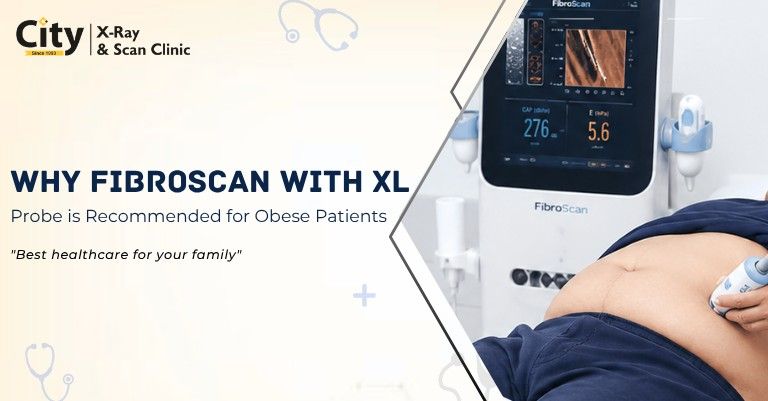
- Obesity: A heavy layer of fat between the probe and the liver can make it difficult to obtain an accurate result. Newer probes (XL probes) have been designed to overcome this issue.
- Ascites: Fluid in the abdomen prevents shear waves from reaching the liver, rendering the test ineffective.
- Narrow Intercostal Spaces: In some people, the gap between the ribs is too narrow to provide an accurate reading.
In certain circumstances, your doctor may offer alternate testing, such as MR Elastography.
Conclusion
Fibroscan technology represents a significant advancement in hepatology. It helps in diagnosing liver disease, eliminating the dread and difficulty that formerly surrounded it. By offering a clear, accurate, and quick window into your liver's health, it gives you complete control over early identification and prevention. If you have any risk factors for liver disease, do not wait until symptoms emerge. Proactive health screening is essential for long-term well-being. Talk to your doctor about whether a Fibroscan is right for you.
Frequently Asked Questions
How long does a FibroScan take?
FibroScan is quick, usually taking less than ten minutes. It is a quick process that requires no downtime afterwards.
Is the FibroScan painful?
No, a FibroScan is totally painless. You may feel some pressure on your skin, but the technique is non-invasive and gentle.
Do I have to prepare for a FibroScan?
Preparation is little. You may be requested to fast for several hours before to the test.
Can a FibroScan replace a liver biopsy?
In many circumstances, FibroScan can substitute a liver biopsy since it produces consistent results without the need for an invasive treatment. However, in some cases, a biopsy may still be necessary.
Is the FibroScan safe for everyone?
Yes, FibroScan is a safe and non-invasive treatment that is suited for the majority of people. It does not use radiation, making it an excellent solution for patients who require regular monitoring of liver health. If you have any special health conditions, consult your doctor before arranging a FibroScan.
Will I receive the findings of my FibroScan immediately?
You may receive preliminary findings right after your test. However, your doctor will make the ultimate interpretation after reviewing the sub-specialised radiologist's report. Your doctor will discuss the results with you during your follow-up appointment.
Do I need a FibroScan if I don't have any symptoms of liver disease?
Even if you have no symptoms, your doctor may order a FibroScan if you have a history of alcohol consumption, obesity, diabetes, or a family history of liver disease. Early identification is critical to maintaining liver health!


_Symptoms,_Causes,_Transmission,_Testing,_Treatment_Prevention.png)

Comments List