
Brain Stroke: Symptoms, Types, Causes, Risk Factors, Diagnosis, and Treatment

- What is a Brain Stroke?
- What Are the Symptoms of a Brain Stroke?
- What Are the Warning Signs of Brain Stroke?
- What Are the Types of Brain Stroke?
- What Are the Causes of Different Types of Brain Strokes?
- How to Diagnose a Stroke?
- How to Diagnose a Stroke?
- What is the Treatment for Brain Stroke?
- What Are the Prevention Tips for Brain Stroke?
- Conclusion
- Frequently Asked Questions
- Related Articles
What is a Brain Stroke?
Brain stroke is a life-threatening medical condition in which the brain or any part of the brain cannot get enough blood flow, due to which the brain cells cannot get enough oxygen and nutrients, and they start dying. It is commonly known as stroke and is the 2nd most common cause of death worldwide.
What Are the Symptoms of a Brain Stroke?
Symptoms of a brain stroke may be different depending on which part of the brain is affecting but some of the common symptoms of a brain stroke are listed below:
- Dizziness
- Fatigue
- Blurred vision
- Difficulty in breathing
- Memory loss
- Mood swing
- Loss of consciousness
- Seizures
- Severe Headache
- Paralysis on one side of the body
- Loss of coordination
What Are the Warning Signs of Brain Stroke?
You can remember the warning signs of stroke by remembering the most popular acronym, BE FAST
- Balance: keep an eye out for loss of balance.
- Eyes: watch out for a sudden loss of vision
- Face: look for a drop on a face
- Arms: If someone is having a stroke, then look for their arms as they will drop in an unusual way
- Speech: Slurring of speech
- Time: time is very important in case of stroke. If someone is having a stroke in front of you, track the time when symptoms start, as it can help the doctor to make an informed treatment decision.
What Are the Types of Brain Stroke?
There are two types of brain stroke depending on their causes:
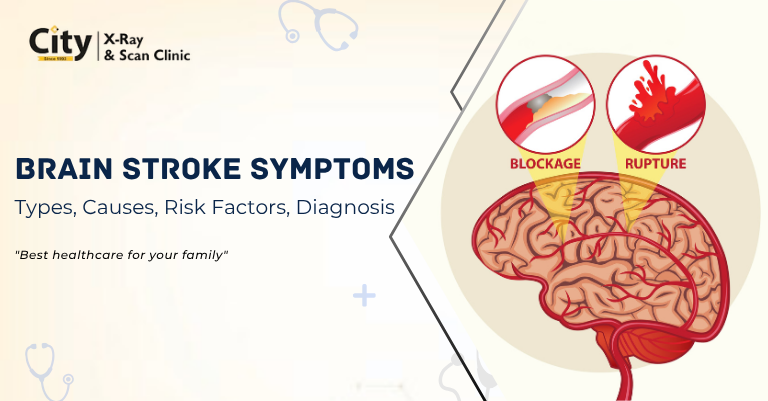
- Ischemic Stroke: It occurs when the blood supply to the brain is blocked due to blocked brain vessels, and brain cells cannot get enough oxygen, due to which cells die in no time. The treatment involves the removal of the clot and resolving the underlying issue due to which the clot develops.
- Haemorrhagic Stroke: This type of stroke causes bleeding in the brain. It occurs when the blood vessel ruptures and causes bleeding in the brain. The treatment involves surgery and medication to control the bleeding.
What Are the Causes of Different Types of Brain Strokes?
Causes of haemorrhagic stroke: Causes of haemorrhagic stroke are listed below:
- Hypertension or high blood pressure:
- Aneurysm
- Head trauma
- Brain tumour
- Any medical condition that can weaken the blood vessels in the brain
Causes of Ischemic Stroke: Causes of Ischemic stroke are listed below:
- Clotting issues
- Atherosclerosis
- High cholesterol
- Atrial fibrillation
How to Diagnose a Stroke?
Stroke can occur to anybody, but some people have a high chance of stroke, especially:
- People who are above 65 years old
- Smoker
- Alcoholic
- Obesity
- Family history of stroke
- Sedentary Lifestyle
- Frequent migraine headaches
- Having heart disease
How to Diagnose a Stroke?
A healthcare provider will diagnose a stroke by using a combination of different diagnostic tests. The most common tests for diagnosing stroke are listed below:
CT Scan
CT scan, also known as Computed tomography, is the first line or primary test for stroke, especially in emergency conditions as it is a fast, reliable, and easily accessible test. A CT scan can be done within a minute. A CT scan uses X-rays and computer technology to create a detailed image of the organ. A CT scan can help in showing the things that regular X-rays cannot show
Your technician may ask you to remove any metallic object such as jewellery, hairpins, watch, etc., before the test. Then, you are supposed to lie down on the table, which will then slide into the donut-shaped machine called a CT scanner. During this time, your technician will ask you to stay still and hold your breath also for a few seconds. Avoid any movement during this time as it can affect the results, the CT scan usually takes 5 minutes.
MRI Brain
MRI ( Magnetic Resonance Imaging) provides the detailed image of the brain it helps in diagnosing the early ischemic stroke effectively which cannot be diagnosed with CT scan. MRI Scan is highly sensitive and can detect even a small injury to the brain. MRI is but time consuming and is not done in emergency condition however it is recommended for long term follow up of the injury severity.
For MRI also your technician will ask you to remove any metallic object and you are supposed to lie down on a bed like table which will then slide into a MRI machine, as soon as the process start you will hear a loud noises which indicate MRI machine is scanning your organ and clicking pictures , you can use ear plugs to avoid this noise, before the MRI, inform your doctor if you are claustrophobic or have any kind of implant into the body
Carotid Doppler Ultrasound
This is another very important diagnostic tool for stroke , this test helps in determining whether there is any issue to the blood vessels that take blood to the brain. Carotid doppler ultrasound test evaluates the blood flow in the carotid artery, this artery takes the blood into the brain, a narrowing of carotid artery increases the risk of stroke. This test also helps in deciding the treatment regimen of the patient.
CT Angiography
This is a type of CT scan test but it requires to inject a contrast material into the body to help diagnose and evaluate the blood vessel condition. Some procedures were followed as in normal CT but your technician may ask you to come empty stomach before the test as you need to take the contrast material before the test, contrast is injected through the catheter placed in the vein of the arm.
What is the Treatment for Brain Stroke?
The treatment of the stroke depends on how much damage is already done to your brain and which part is affected , the main goal is to restore the normal blood flow to the brain as soon as possible. The treatment approach for brain stroke depends on the type of stroke
Treatment for ischemic stroke:
- Thrombolytics
- Blood thinners
- Removal of clot by using a catheter
Treatment for haemorrhagic stroke
- Maintenance of blood pressure
- Surgical intervention
- Medication which can helps in reducing bleeding and excessive bleeding
What Are the Prevention Tips for Brain Stroke?
The prevention tips for stroke are listed below
- Maintain a healthy body weight
- Maintain your blood sugar levels
- Do regular exercise
- Avoid smoking
- Limit your alcohol intake
- Eat a diet that is healthy to your heart
Conclusion
Brain stroke is not any other disease its a very serious and life threatening condition, therefore it is very important to keep an eye on your health, if someone is having a stroke then they should seek an immediate doctor attention even if you have or know someone who is having a stroke risk factors then get yourself or them checked before it's too late because the prevention of stroke is easily then actually management of the stroke disease.
Frequently Asked Questions
How to prevent stroke?
Stroke can be prevented by choosing a healthy lifestyle and avoid living the sedentary lifestyle
What are the different types of stroke?
Stroke is divided into two types based on its cause
- Ischemic stroke
- Haemorrhagic stroke
Which stroke test is done in an emergency situation?
A CT test is generally done in an emergency situation, as it is fast and easily accessible
How to know if someone is having a stroke?
Symptoms of a brain stroke are: Difficulty in breathing, Memory loss, Mood swing, Loss of consciousness, Seizures, Severe Headache.
Related Articles




_Symptoms,_Causes,_Transmission,_Testing,_Treatment_Prevention.png)

Comments List