
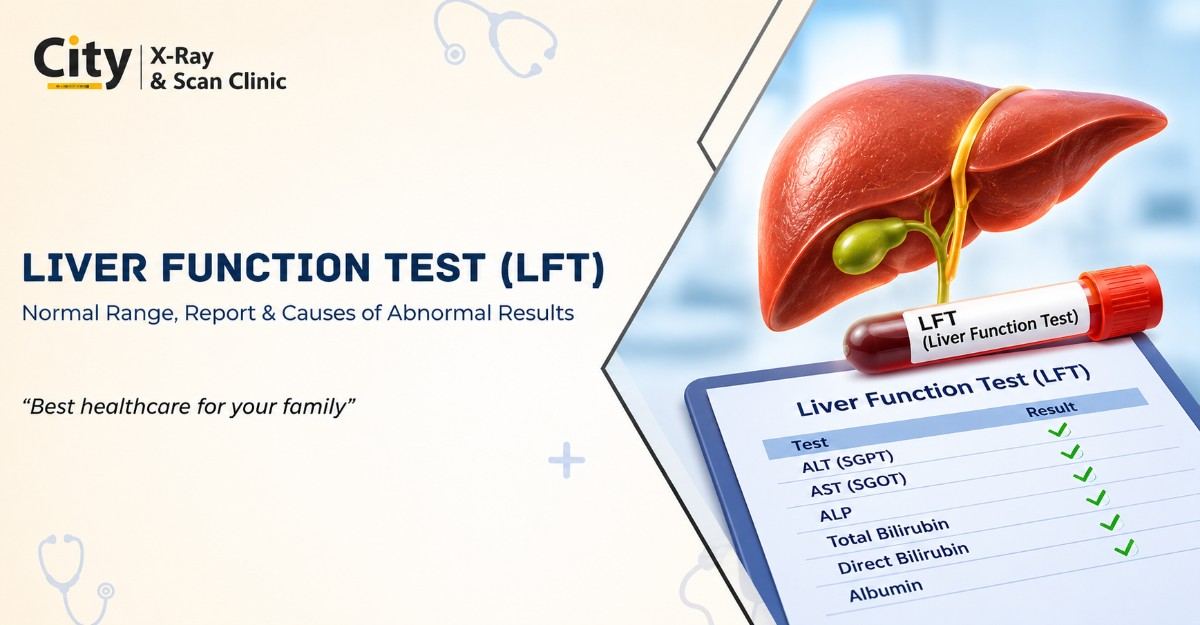
Liver Function Test (LFT): Normal Range, Report Explained and Causes of Abnormal Results

- What is a liver function test?
- Why do doctors advise an LFT?
- What does a liver function test include?
- Understanding each test
- Common patterns and what they may suggest
- Fatty liver and LFT
- How to prepare for an LFT
- How the test is done
- How to keep your liver healthy
- When to see a doctor urgently
- LFT at City X-Ray & Scan Clinic
- Blood Test in Delhi: Blood Test Near Me with Free Home Sample Collection
- Key takeaways
- Frequently Asked Questions
- Book your liver function test
Quick answer: A liver function test (LFT), also called a liver profile, is a group of blood tests that checks how well your liver is working. It measures liver enzymes (SGPT/ALT, SGOT/AST, ALP, GGT), bilirubin and proteins such as albumin. Raised enzymes may point to liver inflammation or injury, for example from fatty liver, hepatitis, alcohol or medicines. Most people do not need strict fasting, but follow your lab's instructions, and discuss abnormal results with a doctor.
What is a liver function test?
The liver is a large organ on the right side of the upper abdomen. It makes proteins, produces bile for digestion, stores energy, processes nutrients and medicines, and removes toxins from the blood. Liver problems often cause no symptoms until they are advanced, so blood tests are an important way to find them early.
A liver function test (LFT) is a panel of blood tests that gives information about liver cell injury, bile flow and the liver's ability to make proteins. It is often called a liver profile, "LFT blood test," or "blood test for liver." Despite the name, some of the tests do not directly measure liver "function" but show signs of liver damage or bile duct problems.
Why do doctors advise an LFT?
An LFT may be advised:
- as part of a routine health check-up
- when there are symptoms such as yellow eyes or skin (jaundice), dark urine, pale stools, itching, abdominal pain, nausea, loss of appetite, unexplained tiredness or swelling in the legs and abdomen
- if you have fatty liver, diabetes, obesity or high cholesterol
- to check for hepatitis and to monitor known liver disease
- when taking medicines that can affect the liver, such as some TB medicines, statins, antiepileptics, painkillers (including excess paracetamol) and others
- in people who drink alcohol
- before surgery or chemotherapy
- to evaluate gallstones or bile duct problems
What does a liver function test include?
| Test | What it shows |
|---|---|
| SGPT / ALT (alanine aminotransferase) | Liver cell injury. More specific to the liver |
| SGOT / AST (aspartate aminotransferase) | Liver, but also muscle and heart |
| ALP (alkaline phosphatase) | Bile duct problems, bone conditions |
| GGT (gamma-glutamyl transferase) | Bile duct problems and alcohol effect |
| Total bilirubin | Breakdown product of red cells, processed by the liver |
| Direct (conjugated) bilirubin | Bilirubin processed by the liver |
| Indirect bilirubin | Calculated: total minus direct |
| Total protein | Overall protein in the blood |
| Albumin | Protein made by the liver |
| Globulin | Other proteins, includes antibodies |
| A/G ratio | Balance between albumin and globulin |
*Ranges differ between laboratories, with age and sex. Use the range printed on your own report. These values are for general understanding.
Understanding each test
SGPT (ALT) and SGOT (AST)
These are enzymes inside liver cells. When liver cells are inflamed or damaged, the enzymes leak into the blood and their levels rise.
ALT is more specific for the liver. AST is also found in the heart, muscles and other organs.
- Mild rise (less than about 2 to 3 times normal) is commonly seen in fatty liver (non-alcoholic fatty liver disease), obesity, diabetes, some medicines, and mild viral infections.
- Marked rise may occur in acute viral hepatitis, drug or toxin injury, and in some autoimmune conditions.
- AST higher than ALT (especially a ratio above about 2) can be seen with alcohol-related liver disease.
- Very high levels with symptoms need urgent medical review.
ALP and GGT
Alkaline Phosphatase (ALP) and Gamma-Glutamyl Transferase (GGT) are enzymes primarily linked to the bile ducts.
- Raised ALP with raised GGT: Often suggests a bile flow problem (cholestasis), such as gallstones, a blocked bile duct, or certain liver conditions.
- Raised ALP alone: May occur due to non-liver causes, including bone conditions, normal bone growth in children, and pregnancy.
- Raised GGT alone: Commonly triggered by alcohol intake or certain medications (enzyme induction) without underlying bile duct obstruction.
Bilirubin
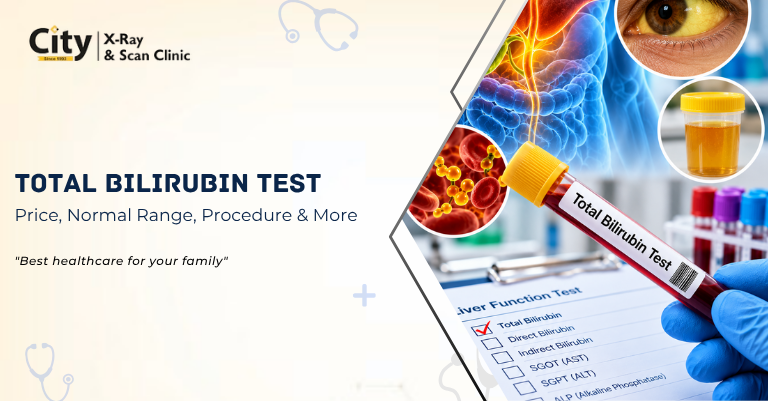
Bilirubin is a yellow pigment formed when old red blood cells break down. The liver processes it and clears it out of the body through bile. High levels cause jaundice (yellowing of the skin and the whites of the eyes).
- High indirect (unconjugated) bilirubin: Typically points to increased red blood cell breakdown (haemolysis) or Gilbert’s syndrome, a common, harmless genetic variation where bilirubin rises mildly during fasting, stress, or illness.
- High direct (conjugated) bilirubin: Suggests an issue with liver cells or bile drainage, such as hepatitis, gallstones, or a blocked bile duct.
Albumin and Total Protein
Albumin is a vital protein produced exclusively by the liver.
- Low albumin: Can indicate chronic, long-standing liver disease, though it also drops in kidney conditions causing protein loss, malnutrition, or severe chronic illness.
Clinical note: Because albumin breaks down slowly in the bloodstream, it reflects liver synthetic function over weeks, not hours or days.
Common patterns and what they may suggest
| Pattern | May suggest |
|---|---|
| Mildly raised ALT and AST, normal bilirubin | Fatty liver, medicines, mild hepatitis, obesity or diabetes |
| Very high ALT and AST | Acute hepatitis (viral, drug-related or toxic) |
| AST greater than ALT, raised GGT | Alcohol-related liver disease |
| Raised ALP and GGT, raised direct bilirubin | Bile duct blockage or cholestasis |
| Raised indirect bilirubin only, other tests normal | Gilbert's syndrome or haemolysis |
| Low albumin with high bilirubin | Advanced or long-standing liver disease |
These patterns guide further tests, such as an abdominal ultrasound, hepatitis B and C tests, a lipid profile, blood sugar, or other tests. A single abnormal LFT does not equal liver disease. The pattern, the trend and your symptoms matter.
Fatty liver and LFT
Fatty liver is one of the most common reasons for mildly raised liver enzymes in India and elsewhere. Many people have normal LFT results even when fat is present in the liver, and an ultrasound of the abdomen often finds fatty liver. Lifestyle changes make a big difference: weight reduction, regular exercise, reducing sugar and refined foods, limiting alcohol and managing diabetes and cholesterol. Your doctor may advise additional tests such as a FibroScan to check liver stiffness.
How to prepare for an LFT
- Fasting: An LFT alone does not usually need fasting, but some laboratories advise fasting for 8 to 12 hours, especially if other tests such as blood sugar or lipid profile are done together. Follow the lab's instruction.
- Medicines: Tell the lab and your doctor about all medicines and supplements, including herbal remedies, painkillers, and any recent paracetamol use.
- Alcohol: Avoid alcohol for at least a day before the test unless your doctor advises otherwise, and be honest about how much you drink.
- Exercise: Avoid heavy exercise just before the test, because strenuous exercise can raise AST.
- Water: You can drink water.
How the test is done
A small blood sample is taken from a vein in the arm, which takes a minute or two. You may feel a brief pinch. The sample is analysed in a laboratory, and results are often ready the same day.
How to keep your liver healthy
- Maintain a healthy weight and exercise regularly.
- Eat a balanced diet with plenty of vegetables, fruit, whole grains and protein, and limit sugar, fried and processed foods.
- Limit or avoid alcohol.
- Get vaccinated against hepatitis B and, where advised, hepatitis A.
- Do not take medicines, painkillers or herbal supplements without advice. Never exceed the paracetamol dose.
- Manage diabetes, cholesterol and blood pressure.
- Practise safe injection and sexual practices to prevent hepatitis B and C.
- Have periodic check-ups if you are at risk.
When to see a doctor urgently
Seek medical care promptly if you have:
- yellow eyes or skin, dark urine or pale stools
- severe abdominal pain, repeated vomiting or vomiting blood
- swelling of the abdomen or legs
- confusion or unusual drowsiness
- black stools
- a very high liver test result reported by the lab
LFT at City X-Ray & Scan Clinic
City X-Ray & Scan Clinic offers liver function tests and related pathology services in Delhi. If your doctor advises an imaging test along with the blood tests, such as an abdominal ultrasound or a FibroScan, you can get this done at the same place.
Blood Test in Delhi: Blood Test Near Me with Free Home Sample Collection
If you are searching for a blood test near me or a blood test in Delhi, City X-Ray & Scan Clinic offers a wide menu of pathology tests with accurate and timely reports. City X-Ray & Scan Clinic is a NABH accredited (radiology) and NABL accredited (pathology) diagnostic centre, as per scope, with more than 32 years of experience in diagnostic healthcare in Delhi. You can find us at City X-Ray centres in Tilak Nagar, Vikaspuri and Vishnu Garden, and at City Imaging partner labs across West and South Delhi, including Dwarka (Sector 6 and Sector 12A), Janakpuri, Paschim Vihar, Hari Nagar, Najafgarh, Naraina, Palam, Sagarpur and Safdarjung Development Area (SDA). See the full list on our Locate Us page.
You can book a blood test at home with free home sample collection, or visit a centre. Ask about the CBC test price in Delhi, LFT test price in Delhi and our health check-up packages. For liver health, search for LFT test in Delhi or liver function test price in Delhi. Useful links:
- Best pathology lab in Delhi
- Free home blood sample collection
- CBC (complete blood count) test
- Liver function test (LFT)
- Health check-up packages
To book, call 011-4725-2000, send "Hi" on WhatsApp to 9577727772, or book online at www.cityxrayclinic.com. Timings differ by centre (most open from 7:00 AM or 8:00 AM, and some stay open until 11:00 PM), and free home sample collection is available for blood tests. Please check the Locate Us page or call before you visit to confirm that the scan you need is available at your nearest centre.
Key takeaways
- An LFT is a panel of blood tests that checks liver injury, bile flow and protein production.
- A mild rise in SGPT/SGOT is commonly due to fatty liver. Very high levels need prompt medical review.
- Interpretation depends on the pattern of values and your symptoms.
- Avoid self-medication and alcohol, and discuss any abnormal result with your doctor.
Frequently Asked Questions
What is the normal range for SGPT and SGOT?
Roughly up to about 40 to 56 U/L for ALT (SGPT) and about 10 to 40 U/L for AST (SGOT), but ranges vary between labs. Use the reference range on your report.
What causes high SGPT?
Common causes are fatty liver, viral hepatitis, alcohol, medicines, obesity, and diabetes. Your doctor will find the cause based on your history and further tests.
Do I need to fast for an LFT?
Not always. An LFT alone often does not need fasting, but some labs ask for fasting, particularly when other tests are done together. Follow the lab's instructions.
What does high bilirubin mean?
High bilirubin can cause jaundice. It may be due to increased red cell breakdown, Gilbert's syndrome, liver disease or a bile duct blockage. The type of bilirubin (direct or indirect) helps to find the cause.
Does a normal LFT mean my liver is healthy?
Not always. Some liver conditions, including early fatty liver and early cirrhosis, can have normal enzyme levels. Doctors may advise an ultrasound or other tests if there is a concern.
Can fatty liver be reversed?
Early fatty liver can often improve with weight loss, regular exercise, a healthier diet, limited alcohol and good control of diabetes and cholesterol.
Can medicines affect liver test results?
Yes. Many medicines, including some painkillers, antibiotics, TB drugs and statins, can raise liver enzymes. Never stop a prescribed medicine on your own. Talk to your doctor.
How long does it take to get LFT results?
Most laboratories provide results on the same day.
How often should I get an LFT?
Your doctor will advise. Many adults include it in periodic check-ups. People with liver disease, fatty liver, heavy alcohol use or those on certain medicines may need more frequent testing.
Is a high ALP always a liver problem?
No. ALP also rises with bone conditions, growth in children and pregnancy. Doctors look at ALP with GGT and bilirubin to know its source.
Book your liver function test
To book at City X-Ray & Scan Clinic, call 011-4725-2000 or visit www.cityxrayclinic.com.





Comments List