
Impact of Climate Change on Dengue Fever Transmission

- What Is Dengue Fever?
- How Does Climate Affect Dengue Transmission?
- Why Is This Important for India?
- How Can You Protect Yourself From Dengue?
- Keep Your Surroundings Clean
- Recognising Dengue Symptoms Early
- Warning Signs of Severe Dengue
- The Role of Diagnostic Testing
- Climate Change and the Future of Dengue Prevention
- Frequently Asked Questions
- Conclusion
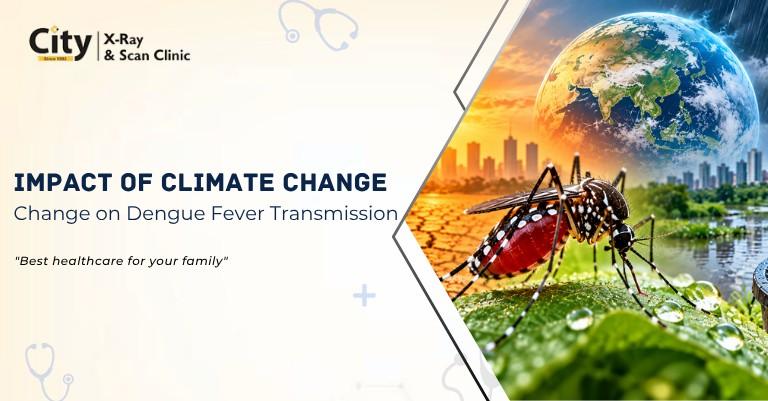
Dengue fever is one of the most common mosquito-borne viral infections in tropical and subtropical regions. Every year, millions of people are infected with dengue, with cases often increasing during warm and rainy seasons. While rainfall, stagnant water, urbanisation, and mosquito control have long been recognised as important factors in dengue transmission, climate change is increasingly influencing where and when dengue can spread.
Changes in temperature, rainfall patterns, humidity, and extreme weather events can affect the life cycle, population, and geographic distribution of Aedes mosquitoes—the primary vectors responsible for spreading dengue virus.
For people living in areas such as Delhi NCR, understanding the connection between climate and dengue can help communities take preventive measures, recognise symptoms early, and seek appropriate medical care when required.
What Is Dengue Fever?
Dengue fever is a viral infection caused by the dengue virus and transmitted primarily through the bite of infected female Aedes aegypti mosquitoes. Aedes albopictus can also contribute to transmission in some regions.
An infected mosquito can transmit the virus when it bites another person. Dengue does not usually spread directly from person to person through casual contact.
Symptoms may begin several days after an infected mosquito bite and can include:
- High fever
- Severe headache
- Pain behind the eyes
- Muscle and joint pain
- Nausea or vomiting
- Skin rash
- Weakness and fatigue
Most people recover with appropriate supportive care. However, some infections can develop into severe dengue, which may cause bleeding, shock, or organ complications and requires urgent medical attention.
How Does Climate Affect Dengue Transmission?
Mosquitoes are highly sensitive to environmental conditions. Temperature, rainfall, and humidity can influence their breeding, survival, feeding behaviour, and ability to transmit viruses.
Climate change does not mean that every warmer or wetter period will automatically cause a dengue outbreak. Dengue transmission depends on multiple interacting factors, including mosquito populations, virus circulation, human behaviour, sanitation, housing conditions, healthcare access, and mosquito-control measures.
However, changing climatic conditions can create environments that are more favourable for dengue transmission in some locations and during certain periods.
1. Rising Temperatures Can Increase Mosquito Activity
Temperature is one of the most important environmental factors affecting Aedes mosquitoes.
Warmer conditions can speed up mosquito development from eggs to adults, potentially allowing mosquito populations to increase more quickly when other conditions are suitable.
Temperature can also influence the development of dengue virus inside the mosquito. When conditions are favourable, the virus may complete its development within the mosquito more quickly, potentially shortening the time before an infected mosquito becomes capable of transmitting the virus.
However, temperature has limits. Extremely high temperatures can reduce mosquito survival and may make conditions less suitable for transmission.
This means the relationship between temperature and dengue is not simply “higher temperature equals more dengue.” Instead, dengue transmission is affected by whether temperatures remain within a range that supports mosquito survival, reproduction, and virus development.
2. Changing Rainfall Patterns Can Create More Breeding Sites
Rainfall has a major role in mosquito breeding because Aedes mosquitoes lay their eggs in small collections of stagnant water.
Water can accumulate in:
- Buckets and containers
- Flowerpots and trays
- Discarded tyres
- Coolers
- Open tanks
- Construction materials
- Roofs and drains
- Other objects that collect rainwater
Changes in rainfall patterns can therefore affect the availability of mosquito breeding sites.
Heavy rainfall may create numerous temporary water collections around homes and communities. At the same time, periods of irregular rainfall followed by warm weather can create favourable conditions for mosquito reproduction.
Interestingly, very heavy rainfall does not always increase dengue transmission. Flooding can sometimes wash away mosquito breeding sites. The effect depends on the intensity, timing, duration, and local conditions surrounding the rainfall.
3. Humidity Can Influence Mosquito Survival
Humidity is another environmental factor associated with mosquito activity.
Higher humidity can help mosquitoes survive for longer periods, particularly when temperatures are suitable. A longer mosquito lifespan matters because the mosquito needs to survive long enough for the dengue virus to develop inside its body before it can transmit the infection.
Humidity can therefore interact with temperature to influence dengue transmission.
Areas experiencing changes in temperature and humidity may see changes in the seasonal patterns of mosquito activity.
4. Climate Change May Extend the Dengue Transmission Season
In some regions, changing climatic conditions may alter the traditional seasonal pattern of dengue.
Historically, dengue transmission may have been concentrated during particular warm and rainy months. If suitable temperatures and humidity persist for longer periods, mosquito activity may potentially continue beyond the usual transmission season.
This does not mean that every region will experience a longer dengue season. Local climate, mosquito-control programmes, urban development, and other environmental factors remain important.
Nevertheless, changing seasons can make it more difficult for communities to rely only on traditional “dengue season” awareness campaigns.
5. Dengue May Expand Into New Geographic Areas
One of the major concerns associated with climate change is the potential expansion of mosquito habitats.
If previously cooler areas become warmer and environmental conditions become suitable for Aedes mosquitoes, these regions may become more capable of supporting mosquito populations.
This could increase opportunities for dengue transmission in locations where the disease was previously less common.
However, mosquito presence alone does not mean that dengue will automatically become established. Transmission also requires the introduction and continued circulation of dengue virus among human and mosquito populations.
Urbanisation, population movement, housing conditions, water storage practices, and public-health infrastructure can strongly influence whether transmission occurs.
6. Extreme Weather Events Can Complicate Dengue Control
Climate change is associated with changes in the frequency or intensity of some extreme weather events. Floods, storms, and other disruptions can affect mosquito-control activities and healthcare services.
For example, flooding may create standing water in unexpected locations. Damage to infrastructure may make waste management and water storage more difficult. At the same time, displaced populations may live in conditions where exposure to mosquitoes increases.
Extreme weather events can also place additional pressure on healthcare systems, potentially making disease surveillance and outbreak response more challenging.
Why Is This Important for India?
India has environmental and social conditions that can support dengue transmission, including warm temperatures, seasonal rainfall, dense urban populations, water-storage practices, and areas where stagnant water can accumulate.
Cities such as Delhi and other parts of the NCR can experience seasonal increases in mosquito activity.
Climate-related changes may interact with these existing conditions. As weather patterns become less predictable, dengue prevention may require year-round attention rather than focusing only on a specific part of the year.
Preventing dengue therefore involves both individual precautions and broader community-level measures.
How Can You Protect Yourself From Dengue?
Reducing mosquito exposure and eliminating breeding sites are among the most important preventive measures.
Remove Standing Water
Check your home, workplace, balcony, terrace, garden, and surrounding areas regularly for containers holding stagnant water.
Empty and clean water containers frequently, and keep storage containers properly covered.
Protect Yourself From Mosquito Bites
- Aedes* mosquitoes are commonly active during daylight hours, although bites can occur at other times.
Consider using:
- Mosquito repellents
- Long-sleeved clothing
- Window and door screens
- Mosquito nets where appropriate
- Other recommended mosquito-control measures
Keep Your Surroundings Clean
Dispose of discarded containers, tyres, plastic items, and other objects that can collect water.
Community-level cleanliness is important because mosquitoes do not recognise property boundaries. A breeding site near one home can contribute to mosquito populations across a wider neighbourhood.
Recognising Dengue Symptoms Early
Dengue can initially resemble several other viral illnesses. Common symptoms include sudden fever, headache, body aches, pain behind the eyes, nausea, vomiting, rash, and significant tiredness.
If you develop a high fever or other symptoms that could indicate dengue—particularly during periods of increased local transmission—consult a healthcare professional.
A doctor may recommend blood tests based on your symptoms, medical history, timing of illness, and local disease activity.
Depending on the stage of illness and clinical situation, testing may include tests such as dengue NS1 antigen testing, dengue IgM/IgG antibody testing, or a complete blood count (CBC).
Do not rely on symptoms alone to confirm dengue. Testing and medical evaluation can help distinguish dengue from other infections and guide appropriate management.
Warning Signs of Severe Dengue
Most dengue infections are not severe, but warning signs can develop, particularly around the time the fever begins to improve.
Seek urgent medical attention if a person with suspected or confirmed dengue develops symptoms such as:
- Severe abdominal pain
- Persistent vomiting
- Bleeding from the gums or nose
- Blood in vomit or stool
- Extreme weakness or restlessness
- Difficulty breathing
- Unusual drowsiness
- Cold or pale skin
Severe dengue can progress rapidly, so warning signs should not be ignored.
The Role of Diagnostic Testing
Laboratory testing can play an important role when dengue is suspected.
Depending on when symptoms began, healthcare professionals may recommend different tests to detect dengue infection or the body's immune response. A CBC test may also be used to monitor blood counts and help doctors assess the patient's condition.
The appropriate test depends on the individual's clinical situation and the timing of infection. A healthcare professional should guide the testing process rather than relying on a single test result without clinical context.
At City X-Ray & Scan Clinic, patients can consult healthcare professionals regarding appropriate diagnostic investigations based on their symptoms and medical requirements.
Climate Change and the Future of Dengue Prevention
Climate change is only one part of the dengue equation. Effective prevention requires a combination of climate monitoring, mosquito surveillance, environmental management, public awareness, timely diagnosis, and appropriate healthcare.
Communities can reduce dengue risk by eliminating standing water, improving waste management, maintaining clean surroundings, and following local mosquito-control recommendations.
Healthcare systems can also benefit from stronger disease surveillance and early-warning systems that combine information about weather, mosquito activity, and reported infections.
For individuals, one of the most practical approaches is simple: do not wait for peak dengue season to start prevention.
Frequently Asked Questions
Can climate change increase dengue cases?
Climate change can influence temperature, rainfall, humidity, and other environmental conditions that affect Aedes mosquitoes and dengue virus transmission. However, dengue outbreaks are influenced by many factors, so climate change alone does not determine whether cases will increase.
Does hot weather always increase dengue transmission?
No. Mosquitoes have an optimal environmental range. Extremely high temperatures can negatively affect mosquito survival. Dengue transmission depends on the combination of temperature, humidity, rainfall, mosquito populations, and other factors.
Can dengue occur outside the rainy season?
Yes. Dengue transmission can occur outside the traditional rainy season when environmental conditions remain suitable for mosquito activity. The timing and duration of dengue transmission can vary from one location to another.
How can I prevent dengue at home?
Remove stagnant water, keep water-storage containers covered, clean coolers and containers regularly, use mosquito repellents and protective clothing, and maintain clean surroundings.
Which tests are used for dengue?
Depending on the stage of illness, doctors may recommend dengue antigen or antibody tests. A CBC may also be performed to monitor blood counts. The appropriate tests should be selected based on symptoms and the timing of the illness.
Conclusion
Climate change is reshaping environmental conditions that can influence mosquito-borne diseases such as dengue. Rising temperatures, changing rainfall patterns, humidity, and extreme weather events can affect mosquito survival, breeding, and virus transmission.
However, climate is only one part of a much larger picture. Urbanisation, sanitation, water storage, mosquito-control practices, human movement, healthcare access, and public awareness all contribute to dengue risk.
For individuals and communities, prevention remains essential. Eliminating stagnant water, reducing mosquito bites, recognising symptoms early, and seeking timely medical advice can help reduce the impact of dengue.
If you develop symptoms suggestive of dengue, consult a healthcare professional about whether diagnostic testing is appropriate for you.







Comments List