
ADA Pleural Fluid Test: Price, Preparation, Procedure & Results
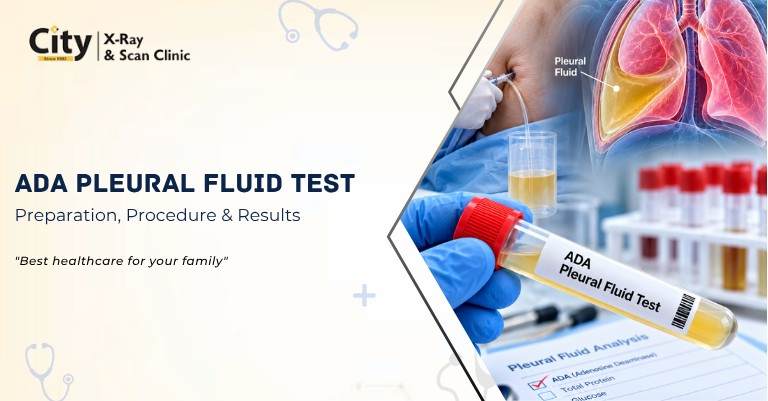

The ADA Pleural Fluid Test is a laboratory test that measures the concentration of an enzyme called adenosine deaminase (ADA) in pleural fluid. Adenosine Deaminase (ADA) is an enzyme found in various cells of the body and is particularly associated with lymphocyte activity, which plays an important role in the immune response. During infections such as tuberculosis (TB), increased immune-cell activity in the affected area can lead to elevated ADA levels. Measurement of ADA in pleural fluid can therefore serve as a useful diagnostic aid in the evaluation of suspected tuberculous pleural effusion One of the most essential applications of pleural fluid ADA testing is to assist doctors in determining whether tuberculosis (TB) is the cause of a pleural effusion, particularly in locations where tuberculosis is prevalent. However, the test does not diagnose tuberculosis on its own. When tuberculosis infects the pleural space, the body's immune system may respond, causing ADA levels in the pleural fluid to increase. As a result, assessing ADA can help a clinician determine the etiology of a pleural effusion. However, an increase in ADA may not always indicate tuberculosis. Other infections and inflammatory diseases can lead to a rise in ADA. As a result, the outcome should always be understood within the appropriate therapeutic context.
Why is the ADA Pleural Fluid Test done?
Pleural fluid ADA testing may be considered in patients presenting with:
- Unexplained pleural effusion
- Suspected tuberculous pleuritis
- Fever or constitutional symptoms associated with pleural effusion
- Clinical or radiological findings suggestive of tuberculosis
- Lymphocyte-predominant exudative pleural effusion
The test may be used with additional pleural fluid studies, such as protein, glucose, LDH, cell count, Gram stain, bacterial culture, cytology, and tuberculosis-specific diagnostics.
What is pleural effusion?
Pleural effusion is a condition in which an abnormal amount of fluid accumulates in the pleural space, the thin space between the lungs and the chest wall. It can occur due to various conditions, including infections, tuberculosis, heart failure, malignancy, and inflammatory diseases.
Sample Collection
No specific fasting or dietary preparation is generally required for pleural fluid ADA testing. The patient should be informed about the procedure, and the sample should be collected by a qualified healthcare professional under appropriate aseptic conditions. Pleural fluid is collected by a procedure called thoracentesis (pleural tap). A healthcare professional inserts a sterile needle or catheter through the chest wall into the pleural space to withdraw the required amount of fluid.
The collected pleural fluid is transferred into an appropriate sterile, properly labelled container and transported to the laboratory as soon as possible for analysis.
Is the ADA Pleural Fluid Test painful?
The laboratory test is painless because it is performed on a collected sample. However, collecting pleural fluid using thoracentesis can be uncomfortable.
Local anesthesia is frequently utilized during the surgery, and the patient is closely monitored by the healthcare professional both during and after fluid collection. Patients should notify the medical staff if they are experiencing severe pain, breathing difficulties, or any other unexpected symptoms.
How long does the test take?
The time required for a laboratory test varies between laboratories. The sample collection method itself takes some time, depending on the amount of fluid present and the patient's condition.
If many investigations are ordered on the same pleural fluid sample, the final report may take longer since some tests necessitate more laboratory processing.
Interpretation of ADA Results
Pleural fluid ADA results should be interpreted together with the patient's clinical findings, pleural fluid characteristics, imaging, and other laboratory investigations.
- Higher ADA levels: May support the possibility of tuberculous pleural effusion, particularly when the clinical presentation is suggestive of tuberculosis and the pleural fluid is lymphocyte-predominant.
- Lower ADA levels: Make tuberculous pleural effusion less likely, although tuberculosis cannot be completely excluded based on ADA alone.
- Intermediate or borderline results: Require correlation with other clinical and laboratory findings.
Apo A and B
Apolipoproteins are proteins that are an important part of lipoproteins and help transport cholesterol and other lipids through the bloodstream.
- Apo A-I is the major protein component of HDL (high-density lipoprotein) and plays an important role in reverse cholesterol transport, helping carry cholesterol from tissues back to the liver.
- Apo B is the main structural protein of atherogenic lipoproteins, including LDL, VLDL and other particles, and reflects the number of cholesterol-carrying particles that can contribute to plaque formation in arteries.
Conclusion
The ADA Pleural Fluid Test is a valuable examination when doctors are attempting to discover the etiology of a pleural effusion. It is especially useful when tuberculous pleural effusion is under consideration. The test detects adenosine deaminase activity in the pleural fluid and can provide valuable supportive information.
However, ADA should not be used as a stand-alone test to diagnose tuberculosis. The results must be paired with the patient's symptoms, examination, imaging findings, and other laboratory tests. As a result, proper interpretation by a doctor is critical for determining the correct diagnosis and treatment plan.
FAQ’s
1. What is the ADA Pleural Fluid Test?
The ADA Pleural Fluid Test measures adenosine deaminase levels in pleural fluid and is commonly used when tuberculosis is suspected.
2. Why is the ADA Pleural Fluid Test done?
It is mainly done to help evaluate the cause of pleural effusion, especially when tuberculous pleural effusion is suspected.
3. Does a high ADA level confirm tuberculosis?
No. A high ADA level can support the possibility of tuberculosis, but other infections and conditions can also increase ADA levels. Additional tests may be required.
4. Is fasting required for the ADA Pleural Fluid Test?
Usually, fasting is not required. However, the doctor may provide specific instructions before collecting the pleural fluid sample.
5. What is the ADA Pleural Fluid Test price in Delhi?
The price can vary between diagnostic centres in Delhi. It is advisable to check the current test charges before booking.








Comments List