
Lipid Profile Test: Cholesterol, Triglycerides, Fasting & Results

- What does a lipid profile measures?
- Why Is a Lipid Profile Test Done?
- Who Should Get a Lipid Profile Test?
- How Is the Lipid Profile Test Performed?
- Fasting required for a Lipid Profile?
- How to Prepare for a Lipid Profile Test?
- Understanding Lipid Profile Results
- What Can Cause High Cholesterol or Triglycerides?
- How Can You Maintain Healthy Cholesterol Levels?
- Is a Lipid Profile Test Painful?
- How Often Should You Get a Lipid Profile Test?
- When Should You Consult a Doctor?
- Conclusion
A Lipid Profile is a common blood test used to measure different types of fats (lipids) present in your blood. It helps assess your cholesterol and other fats level, which gives your doctor a broader picture of your cholesterol and triglycerides levels and help them assess your overall cardiovascular health and can provide important information about your risk of developing heart disease, stroke, and other cardiovascular problems.
It is commonly used as part of routine health screening and to help assess your risk of developing heart and blood vessels diseases.
The test is commonly recommended as part of routine health check-ups, especially for adults, people with diabetes, high blood pressure, obesity, or a family history of heart disease.
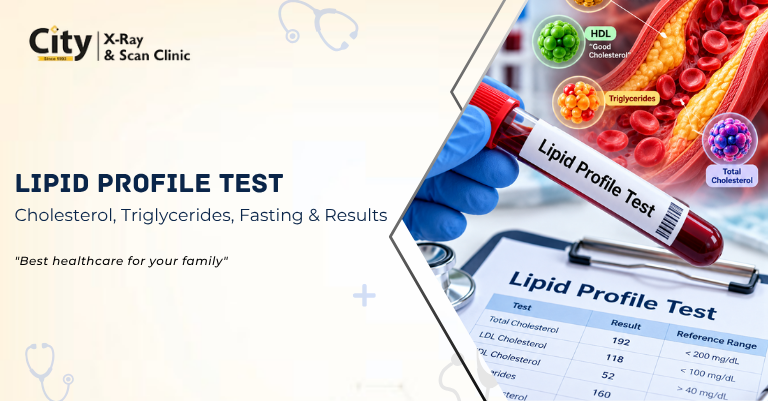
What does a lipid profile measures?
A standard lipid profile generally includes TC, LDLC, HDLC. TG and sometimes VLDL, Cholesterol.
-
Total Cholesterol: Measures the overall amount of cholesterol in your blood.
-
LDL Cholesterol: Often called "bad cholesterol" because high levels can contribute to plaque buildup in arteries.
-
HDL Cholesterol: Often called "good cholesterol" because it helps transport cholesterol away from the arteries.
-
Triglycerides: A type of fat in the blood that can increase with excess calories, obesity, diabetes, and other conditions.
-
VLDL: Very-low-density lipoprotein, which mainly carries triglycerides in the blood.
Why Is a Lipid Profile Test Done?
You doctor may recommended a lipid profile as part of a routine health check-up or when there are factors that may increase your risk of heart disease. It may also be requested when monitoring cholesterol levels overtime, particularly in people who are making lifestyle changes or taking
Cholesterol lowering medication.
A lipid profile interpreted on its own..You doctor may consider your age, blood pressure, diabetes status, family history, smoking status, existing cardiovascular disease, medications and other health factors when assessing your overall risk.
Who Should Get a Lipid Profile Test?
The frequency of lipid testing depends on your age, health history, risk factors, and your doctor's advice. A lipid profile may be recommended for people who have:
-
A family history of high cholesterol
-
Diabetes
-
High blood pressure
-
Obesity or overweight
-
Heart disease
-
Previous stroke or cardiovascular problems
-
A sedentary lifestyle
-
A diet high in saturated or trans fats
It may also be performed as part of a routine health screening.
How Is the Lipid Profile Test Performed?
A lipid profile is a simple blood test. A healthcare professional collects a small blood sample, usually from a vein in your arm. The sample is then sent to a laboratory for analysis. Results are generally reported for total cholesterol, LDL cholesterol, HDL cholesterol, and triglycerides, along with other calculated or measured parameters depending on the laboratory.
The procedure usually takes only a few minutes.
A lipid profile is performed using a blood sample collected from a vein, usually from the arm. The sample is processed in the laboratory to measures the requested lipid parameters.
The blood collection procedure generally takes only a few minutes. You may experience brief discomfort at the site of collection, and mild bruising can occasionally occur.
Fasting required for a Lipid Profile?
Fasting is not required for every lipid profile test. Whether fasting is necessary depends on the reason for testing, the individual patient’s circumstances, and the specific ests being performed.
If fasting has been advised, you should follow the instructions provided by your doctor or laboratory. Typically, fasting means avoiding food for the specified period before the blood sample is collected. If you are unsure whether you need to fast, please confirm with your healthcare provider or the laboratory before visiting for the tests.
How to Prepare for a Lipid Profile Test?
If your doctor or laboratory has advised fasting, follow their instructions carefully. You may also be advised to:
-
Avoid heavy or fatty meals before the test
-
Follow the recommended fasting period
-
Drink water if permitted
-
Inform your doctor about medicines or supplements you take
-
Avoid strenuous exercise immediately before testing if instructed
Do not stop prescribed medicines unless your doctor specifically tells you to do so.
Understanding Lipid Profile Results
Lipid profile results are interpreted based on several factors, not just one number. Your doctor may consider your age, medical history, blood pressure, diabetes status, smoking history, family history, and overall cardiovascular risk. A result outside the laboratory's reference range does not automatically mean that you have a disease. Your doctor can explain what your results mean for your individual health.
What Can Cause High Cholesterol or Triglycerides?
Several factors can affect lipid levels, including:
-
Diet high in saturated or trans fats
-
Excess body weight
-
Lack of physical activity
-
Diabetes
-
Certain medical conditions
-
Smoking
-
Excessive alcohol consumption
-
Family history
-
Certain medications
-
Increasing age
Lifestyle changes and medical treatment, when recommended, can help manage abnormal lipid levels.
How Can You Maintain Healthy Cholesterol Levels?
Healthy lifestyle habits can support better cholesterol and triglyceride levels. These include:
-
Eat a balanced diet rich in vegetables, fruits, whole grains, and healthy sources of protein.
-
Limit foods high in saturated and trans fats.
-
Exercise regularly according to your health condition.
-
Maintain a healthy body weight.
-
Avoid smoking.
-
Limit alcohol consumption.
-
Manage conditions such as diabetes and high blood pressure.
-
Take prescribed medicines as directed by your doctor.
Is a Lipid Profile Test Painful?
The test involves collecting a small blood sample with a needle. You may feel a brief prick or mild discomfort during the blood collection. Any discomfort usually goes away quickly.
How Often Should You Get a Lipid Profile Test?
There is no single testing schedule that applies to everyone. Your doctor may recommend testing based on your age, health status, existing cholesterol levels, family history, and cardiovascular risk factors.
People who are already being treated for high cholesterol may need testing more frequently to monitor their response to treatment.
When Should You Consult a Doctor?
You should discuss your lipid profile results with your doctor if your cholesterol or triglyceride levels are outside the recommended range or if you have other cardiovascular risk factors.
Your doctor can determine whether lifestyle changes, repeat testing, further evaluation, or medication may be appropriate.
Conclusion
A Lipid Profile test is a simple and useful blood test for assessing cholesterol and triglyceride levels. It can help identify abnormal lipid levels and support the early assessment of cardiovascular risk.
Regular health check-ups, a balanced diet, physical activity, and appropriate medical care can play an important role in maintaining healthy cholesterol levels. Always discuss your test results with a healthcare professional for proper interpretation and personalized advice



Comments List