
What to Expect During a FibroScan: Procedure, Preparation, Duration and Results

- Key Takeaways
- What Is a FibroScan?
- What To Expect Before a FibroScan
- What Happens During a FibroScan?
- How Long Does a FibroScan Take?
- Is FibroScan Painful?
- Does FibroScan Use Radiation?
- What Does a FibroScan Measure?
- How Are FibroScan Results Reported?
- What Happens After a FibroScan?
- Who May Need a FibroScan?
- FibroScan vs Liver Biopsy
- Is FibroScan Safe?
- Why Do Doctors Recommend FibroScan for Fatty Liver?
- Frequently Asked Questions About FibroScan
- When Should You Discuss Your FibroScan Results With a Doctor?
- Book a FibroScan in Delhi
- Key Takeaway
- Related Articles
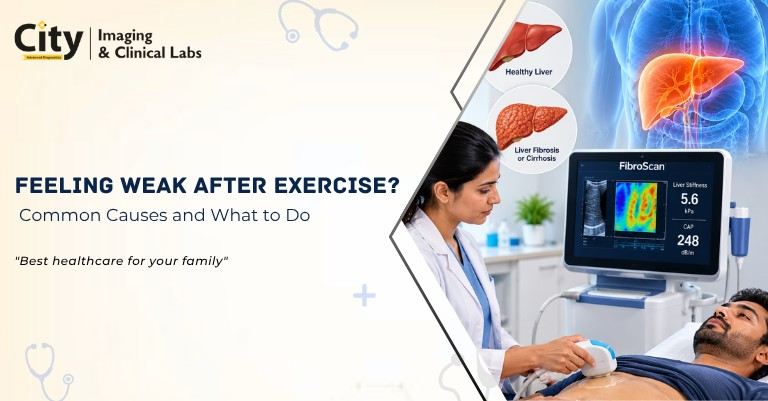
A FibroScan is a quick, non-invasive liver scan that measures liver stiffness and can help assess fibrosis (scarring) and fatty changes in the liver. The procedure usually takes only a few minutes, does not involve needles or radiation, and is generally painless. You can usually return to your normal activities immediately after the scan.
If your doctor has recommended a FibroScan, knowing what happens before, during and after the test can make the experience easier and less stressful.
Key Takeaways
- FibroScan measures liver stiffness (and fat, with CAP) using gentle vibrations; there is no needle and no radiation.
- The scan itself takes only a few minutes, and there is no recovery time.
- You may be asked to avoid eating for several hours before the test, so confirm the instructions with your centre.
- Results are given in kPa (stiffness) and dB/m (CAP) and must be read by a doctor with your other tests.
- FibroScan does not replace every liver test; your doctor may still advise blood tests, imaging or a biopsy.
What Is a FibroScan?
A FibroScan, also called transient elastography, is a non-invasive test used to assess the condition of the liver.
Unlike a liver biopsy, FibroScan does not require a needle or tissue sample. It uses controlled vibrations and ultrasound-based technology to measure the stiffness of the liver.
Liver stiffness can increase when there is fibrosis or scarring. FibroScan can also provide information about fatty changes in the liver through a measurement known as the controlled attenuation parameter (CAP).
Doctors may recommend FibroScan when evaluating or monitoring conditions such as:
- Fatty liver disease
- Metabolic dysfunction-associated steatotic liver disease (MASLD)
- Chronic hepatitis B or hepatitis C
- Liver fibrosis
- Cirrhosis
- Alcohol-related liver disease
- Other chronic liver conditions
The test is generally used along with your medical history, blood tests, imaging and clinical examination rather than as a standalone diagnosis. You can read more in our guides on FibroScan for fatty liver disease and FibroScan in chronic liver disease.
What To Expect Before a FibroScan
Preparation requirements can vary between diagnostic centres and according to your doctor's instructions.
Do You Need to Fast Before a FibroScan?
You may be asked to avoid eating for several hours before the examination. Fasting requirements can vary, so follow the specific instructions provided by the diagnostic centre where you are having the scan.
If you are unsure whether you need to fast, confirm the preparation instructions before your appointment.
What Should You Wear?
You do not usually need special clothing. Wear comfortable clothes that allow easy access to the upper right side of your abdomen.
You may need to expose a small area of the abdomen during the examination.
Should You Take Your Regular Medicines?
Do not stop prescribed medicines unless your doctor specifically tells you to do so. If you have questions about medication or preparation, discuss them with your doctor or the diagnostic centre before the test.
What Happens During a FibroScan?
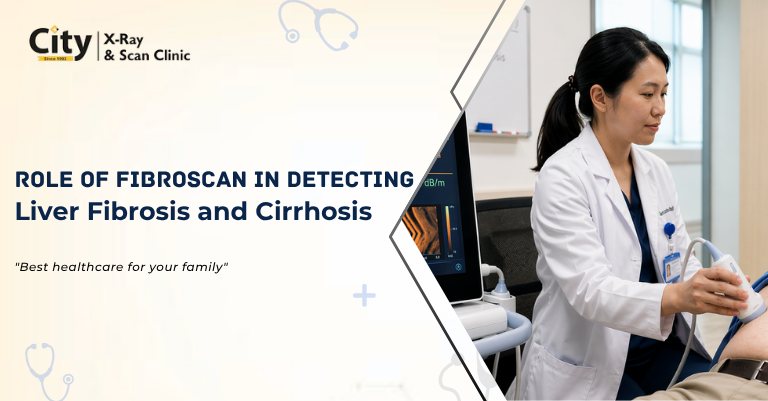
The FibroScan procedure is relatively simple and does not usually cause pain.
Step 1: You Lie Down
You will normally be asked to lie on your back on the examination bed.
The healthcare professional may ask you to place your right arm above or behind your head. This helps provide better access to the liver area.
Step 2: A Probe Is Placed on Your Abdomen
The examiner applies a small amount of ultrasound gel to the skin.
A FibroScan probe is then gently placed against the right upper side of your abdomen, where the liver is located.
Step 3: The Device Takes Measurements
The probe produces gentle vibrations that travel through the liver.
The device measures how quickly these vibrations travel through the liver tissue. This information is used to estimate liver stiffness.
You may feel a small tapping or vibrating sensation each time the probe takes a measurement. It should not normally be painful.
Step 4: Several Measurements Are Taken
The examiner usually takes multiple measurements to obtain reliable results.
You may be asked to remain still and breathe normally during the examination.
Step 5: The Examination Is Completed
Once enough reliable measurements have been obtained, the probe is removed and the gel is wiped away.
The examination itself is usually completed within a short period.
How Long Does a FibroScan Take?
A FibroScan is generally a quick examination. The actual scanning portion often takes only a few minutes, although the total appointment time may be longer because of registration, preparation and positioning.
Unlike many other diagnostic procedures, FibroScan usually does not require a recovery period.
After the examination, you can generally leave the centre and continue your normal daily activities unless your doctor has given you different instructions.
Is FibroScan Painful?
No, FibroScan is generally painless.
The probe is placed gently against the skin of the abdomen. You may feel a series of light taps or vibrations as measurements are taken.
There are no needles, surgical incisions or injections involved in a standard FibroScan examination.
Does FibroScan Use Radiation?
No. FibroScan does not use ionising radiation.
The examination uses mechanical vibrations and ultrasound-based technology to assess liver stiffness and related measurements.
This is one reason FibroScan is commonly used as a non-invasive method for assessing liver health.
What Does a FibroScan Measure?
A FibroScan can provide measurements that help doctors assess liver condition.
1. Liver Stiffness Measurement
The liver stiffness measurement (LSM) provides an estimate of how stiff the liver tissue is.
In general, increased liver stiffness can be associated with greater liver fibrosis. However, stiffness can also be affected by other factors, so the result needs to be interpreted in the appropriate clinical context.
2. Controlled Attenuation Parameter (CAP)
Some FibroScan examinations provide a controlled attenuation parameter (CAP) measurement.
CAP can help assess the amount of fatty change in the liver.
Your doctor may consider CAP along with liver stiffness, blood tests, medical history and other investigations.
How Are FibroScan Results Reported?
FibroScan results are commonly reported using measurements such as:
- kPa (kilopascals) for liver stiffness
- dB/m (decibels per metre) for CAP, when available
A higher liver stiffness value can indicate a greater likelihood of significant fibrosis, but there is no single FibroScan value that applies equally to every patient or every liver disease.
Interpretation can depend on:
- The underlying liver condition
- The presence of inflammation
- Cholestasis
- Liver congestion
- Body habitus
- Recent food intake
- The measurement quality
- Other clinical and laboratory findings
For this reason, you should not interpret a FibroScan number by itself. Your doctor should review the result in combination with your overall clinical information.
What Happens After a FibroScan?
There is generally no special recovery period after FibroScan.
Once the examination is finished:
- The gel is removed from your abdomen.
- You can usually get dressed.
- You can generally leave the diagnostic centre.
- You can normally resume your usual activities.
- Your report can be reviewed by your doctor.
Your doctor may recommend additional blood tests, ultrasound, MRI, follow-up FibroScan examinations or other investigations depending on your results and medical history.
Who May Need a FibroScan?
A doctor may recommend FibroScan when there is a concern about liver fibrosis, fatty liver or chronic liver disease.
It may be considered for people with:
- Fatty liver
- Abnormal liver enzymes (see the SGOT and SGPT tests)
- Chronic hepatitis B or C
- Suspected liver fibrosis
- Known chronic liver disease
- Risk factors for liver disease
- Previous evidence of liver-related abnormalities
Whether FibroScan is appropriate depends on the individual patient and the reason for evaluation.
FibroScan vs Liver Biopsy
FibroScan and liver biopsy are different tests.
| Feature | FibroScan | Liver Biopsy |
|---|---|---|
| Invasive procedure | No | Yes |
| Needle required | No | Yes |
| Tissue sample | No | Yes |
| Radiation | No | No |
| Recovery period | Usually not required | May be required |
| Main purpose | Estimates liver stiffness and fatty change | Examines liver tissue directly |
| Procedure time | Usually a few minutes | Longer and more involved |
FibroScan can provide useful information about liver stiffness without removing liver tissue. However, it does not replace every type of liver investigation, and your doctor may recommend a biopsy or other tests when more detailed tissue information is required.
Is FibroScan Safe?
FibroScan is a non-invasive examination and is generally considered safe.
It does not involve an incision, needle or ionising radiation. Most people tolerate the procedure well.
However, FibroScan may not be suitable or technically reliable in every situation. Factors such as body habitus, fluid in the abdomen and other clinical circumstances can affect the ability to obtain reliable measurements. Some patients, such as those who are obese, may need a special probe; see our guide on FibroScan with the XL probe.
Your doctor or the diagnostic centre can advise whether the examination is appropriate for you.
Why Do Doctors Recommend FibroScan for Fatty Liver?
Fat accumulation in the liver does not always cause symptoms.
In some people, fatty liver can be associated with inflammation and progressive fibrosis. FibroScan can provide non-invasive information about liver stiffness and, when CAP is available, hepatic fat.
This can help doctors assess liver health and monitor changes over time.
However, FibroScan results should be interpreted alongside other information rather than being used alone to diagnose the severity or cause of liver disease. Tests such as the lipid profile and HbA1c are often checked together because fatty liver is linked with cholesterol and blood sugar.
Frequently Asked Questions About FibroScan
1. What should I expect during a FibroScan?
You will usually lie on your back while a healthcare professional places a FibroScan probe against the right side of your abdomen. The probe sends gentle vibrations through the liver and records measurements. You may feel light tapping, but the procedure is generally painless.
2. How long does a FibroScan take?
The actual scanning procedure usually takes only a few minutes. The total time at the diagnostic centre may be longer because of registration and preparation.
3. Is FibroScan painful?
No. FibroScan is generally painless. You may feel gentle tapping or vibration from the probe.
4. Does FibroScan use radiation?
No. FibroScan does not use ionising radiation.
5. Do I need to fast before a FibroScan?
Some centres may ask you to avoid eating for several hours before the test. Follow the preparation instructions provided by your diagnostic centre or doctor.
6. Can I go to work after a FibroScan?
In most cases, there is no recovery period, so you can generally return to your normal activities after the examination.
7. Does FibroScan detect fatty liver?
FibroScan can provide a CAP measurement that helps assess liver fat when this feature is available. Your doctor will interpret the result together with your other clinical findings.
8. Does FibroScan detect liver fibrosis?
FibroScan measures liver stiffness, which can help assess the likelihood and severity of liver fibrosis. The result should be interpreted with other clinical and laboratory information.
9. What does a high FibroScan score mean?
A higher liver stiffness measurement can be associated with more significant fibrosis, but the result does not automatically establish a diagnosis or fibrosis stage. Several factors can influence liver stiffness, so your doctor should interpret the value in context.
10. Is FibroScan better than a liver biopsy?
FibroScan and liver biopsy provide different types of information. FibroScan is non-invasive and measures liver stiffness, whereas biopsy involves obtaining liver tissue for microscopic examination. Your doctor will determine which investigation is appropriate based on your clinical situation.
When Should You Discuss Your FibroScan Results With a Doctor?
A FibroScan result should be interpreted by a qualified healthcare professional, particularly if the result shows increased liver stiffness or other abnormalities.
Your doctor may consider:
- FibroScan liver stiffness
- CAP measurement, if available
- Liver function tests
- Viral hepatitis testing (such as HBsAg and Anti-HCV)
- Ultrasound or other imaging
- Medical history
- Alcohol and medication history
- Metabolic risk factors
- Symptoms and physical examination
Looking at these factors together provides a more meaningful assessment than relying on a single FibroScan number.
Book a FibroScan in Delhi
If your doctor has recommended a FibroScan, choosing a diagnostic centre with appropriate imaging facilities and trained professionals can help ensure that the examination is performed correctly.
City X-Ray & Scan Clinic provides diagnostic imaging services in Delhi NCR. If you are looking for a FibroScan test in Delhi, you can check the available test details, pricing and appointment options before visiting the centre.
For the most appropriate preparation and interpretation of your FibroScan results, follow the instructions provided by your doctor and diagnostic centre.
Key Takeaway
A FibroScan is a quick, painless and non-invasive examination used to assess liver stiffness and, when available, liver fat. During the test, a probe is gently placed on the abdomen and several measurements are taken. There are no needles or radiation, and most people can return to their normal activities immediately afterward.
Related Articles






Comments List